Josef Mengele—Irene Mengele
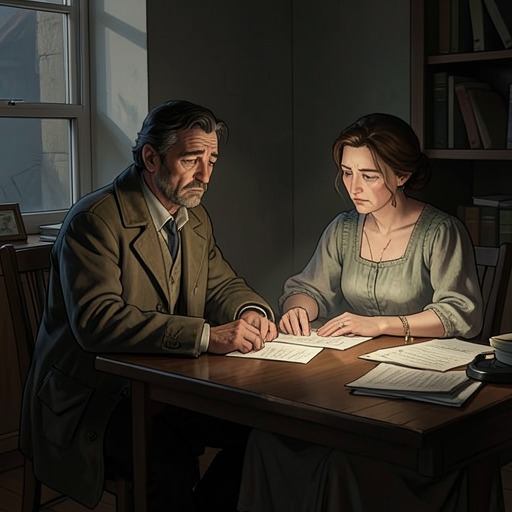
The Disappearance of Josef MengeleJosef Mengele—Irene Mengele was a marriage formed in prewar Germany and broken across the distance between postwar Europe and Argentina. Their relationship began with an encounter in Leipzig in 1936, continued through their marriage on the eve of war and the birth of their son, Rolf, and ended in divorce in 1954. In Mengele’s memories, Irene remained an idealized figure; in her decisions, she refused the fugitive life he wanted her to share.
Meeting and Marriage
A bedside-table portrait dated 1936 becomes the point from which the narrative reconstructs their meeting in Leipzig. Mengele was working at the university hospital, while Irene was passing through after studying art history in Florence. She was nineteen. The account describes his immediate attraction and the way he measured her appearance against the feminine ideal he associated with the painter Cranach. This recollection presents the beginning of the relationship chiefly through Mengele’s gaze: Irene is remembered as an image that confirms his tastes.
Mengele later recalls Irene at his side in Munich’s English Garden, and as a newly married woman riding with him in an Opel two-door coupe on the Reich’s motorways. Their marriage took place on the eve of war. These memories preserve moments he regarded as intimate and happy, but they also come from his later recollection, when the relationship had already ended. The contrast between that remembered closeness and their eventual separation gives the portrait its retrospective weight.
Separation and Competing Accounts
The decisive break followed Mengele’s flight to Argentina. Irene refused to go with him and their little boy, Rolf, or to take up the life of a fugitive overseas. The narrative says that Mengele experienced this as abandonment, while also stating more plainly that Irene ended the relationship. The distinction matters: his anger and sense of rejection do not alter the fact that she chose not to follow him.
In the years of separation, Mengele heard reports from Sedlmeier, his father, Karl Mengele, and Alois that Irene, dressed in black, had found consolation with other men. These are accounts relayed to him, not independently established details of Irene’s life. The narrative also says that she told the American military police that Mengele had died in action, ostensibly to protect him. Later, she fell in love with a shoe salesman from Freiburg im Breisgau. Mengele compared his own return from the front unfavorably with the homecomings of comrades welcomed as heroes by their wives; in his version, Irene’s new attachment became part of the injury he believed she had inflicted. The relationship is thus shown through an asymmetry: his resentment is extensively voiced, while her refusal and subsequent choice are conveyed more briefly but determine what happened.
Letters, Photographs, and Divorce
Distance did not end Mengele’s attempts to address Irene. He sometimes dreamed of taking a steamer to Hamburg, and, on the third Sunday of Advent, wrote her a letter more openly emotional than his other correspondence. He revisited their shared past, including nights together, a summer in Auschwitz, Christmases after his return from the front, and a final meeting in snowy woods where he again asked her to cross the Atlantic. The letter turns remembered scenes into an appeal for reunion; it also makes clear that his repeated request had not changed her decision.
Irene’s reply was markedly restrained. She sent a photograph of Rolf in lederhosen, wished Mengele a happy new year for 1950, and advised him to buy something; the surviving account breaks off before specifying what. The photograph kept their son present in the exchange, but it did not signal a return to married life. When Irene filed for divorce in order to marry the shoe salesman, Mengele took the portrait from its frame and burned it. He then contacted Haase and Uli Rudel to arrange an Argentine defence lawyer who could communicate with her lawyer in Günzburg. He had money available but insisted on using intermediaries and refused to do his former wife any favors. Their divorce was finalized in Düsseldorf on 25 March 1954.
Marriage, Flight, and Legal Afterlife
The marriage also remained relevant to the record of Mengele’s movements after the war. Freiburg im Breisgau was his last registered address, connected to the period at the end of the war when he helped Irene settle there. On 25 February 1959, a prosecutor in Freiburg issued an arrest warrant accusing him of multiple cases of premeditated murder and attempted murder. The former marital connection therefore attached Irene’s European life to the later legal pursuit of Mengele, even though she had declined to join his life in Argentina.
That pursuit crossed borders and exposed how the fugitive’s relationships and aliases occupied different jurisdictions. West German authorities sent an extradition demand to Buenos Aires, with another request directed toward Asunción amid rumors that Mengele had fled to Paraguay. The Argentine process moved slowly through government offices and courts. In Paraguay, Rudel intervened with the minister after officials learned of the anticipated request. Meanwhile, Mossad director Isser Harel planned to capture Mengele after the operation against Eichmann, relying on limited information that Mengele used the name Gregor and ran a furniture factory in central Buenos Aires. Irene was not presented as a participant in these later operations; their significance for the marriage is that the fugitive life she had refused became the setting in which Mengele’s past and identity continued to be pursued.
Significance of the Relationship
The relationship’s arc is not simply a lost romance. It joins an idealized image of Irene to the concrete consequences of her decision to leave: Mengele’s repeated appeals, his anger, the destruction of the portrait, and the formal divorce. The contrast between his elaborate recollections and her concise reply makes the correspondence a measure of unequal attachment, but it does not make her refusal ambiguous. She would not cross the Atlantic or share his fugitive existence, and she proceeded toward a different marriage.
The marriage also marks a boundary between Mengele’s private self-presentation and the public consequences of his crimes. He remembered Irene through scenes of courtship, family life, and separation, while his name appeared on American lists of war criminals and in trials. The relationship therefore cannot be separated from the circumstances that made his proposed future in Argentina a fugitive one. His longing preserved the marriage as a recurring subject in memory; Irene’s refusal, and the divorce that followed, fixed its ending.